
8 Easy Steps to Clean Bath Mats
You can clean a bath mat by shaking off loose debris, washing it in cold or lukewarm water on a gentle cycle with mild detergent, then letting it air dry completely. This keeps cotton and microfiber mats soft and helps rubber-backed mats stay flexible instead of cracking or curling at the edges.
Bath mats are one of the essential items for every home, but they're also one of the easiest bathroom accessories to overlook until they start looking worn, stained, or less absorbent. The right cleaning method really depends on what your mat is made of – a plush cotton mat, a rubber-backed non-slip mat, and a memory foam mat don't all respond the same way to water, heat, or detergent. Once you know what you're working with, keeping a bath mat clean and fresh only takes a few simple steps.
| Care Step | Recommended Method | Why It Matters |
|---|---|---|
|
Check Material |
Identify if your mat is cotton, microfiber, rubber-backed, bamboo, or memory foam |
Determines whether it's machine washable and what temperature is safe |
|
Shake Off Debris |
Remove hair and loose dirt outside or over a bin |
Makes washing more effective and prevents your machine's filter from clogging |
|
Pre-Treat Stains |
Use mild detergent, a baking soda paste, or a dedicated stain remover on visible spots |
Loosens soap scum and mold before the wash cycle |
|
Wash |
Cold or lukewarm water on a gentle cycle |
Protects rubber backing and prevents shrinking or fading |
|
Use Detergent |
Mild, moderate amount; skip fabric softener |
Prevents residue buildup that reduces grip and absorbency |
|
Rinse |
Run an extra rinse cycle if needed |
Removes soap residue that can trap moisture underneath |
|
Dry |
Air dry flat, or tumble dry on low heat if dryer-safe |
Prevents mold, stiffness, and cracked rubber backing |
How to Clean Bath Mats (Step-by-Step)
1. Check the Care Label and Material
Before you wash your bath mat, take a look at the tag or care label sewn into your bath mat. Cotton and microfiber mats are usually the most forgiving and can handle regular machine washing. Rubber-backed mats need gentler treatment, since the rubber layer doesn't respond well to heat. Memory foam mats are sometimes machine washable and sometimes not – some are designed for spot cleaning only, since repeated washing can break down the foam over time. Bamboo or wooden mats shouldn't go anywhere near a washing machine at all; they just need a rinse and a wipe-down. Knowing which category your mat falls into before you start saves you from an accidental shrink or a cracked rubber backing.
2. Shake Off Loose Dirt, Hair, and Debris
Bath mats collect hair, lint, and dead skin cells simply from everyday use. Before washing, take the mat outside or hold it over a bin and give it a firm shake to remove as much of this loose debris as possible.
This step matters more for bath mats than for most other household textiles, since hair in particular can clog your washing machine's filter or drain pump if it isn't shaken out first. A quick shake also means less debris gets trapped in the fibers during the wash, so the mat actually comes out cleaner.
3. Pre-Treat Stains, Soap Scum, or Mold Spots
If your mat has visible soap scum, discoloration, or small mold spots, treat these before washing rather than relying on the wash cycle alone to lift them. Mix a small amount of mild detergent with water, or make a paste with baking soda, and apply it directly to the affected area. If the care label allows, use a dedicated stain or mold remover – but test it on a hidden spot first to see how the fabric reacts.
Let it sit for a few minutes, then gently work it in with a soft-bristled brush. This is especially useful around the edges of rubber-backed mats, where soap residue and moisture tend to build up first. For more stubborn mold, soaking the affected area in a vinegar solution before washing is usually more effective than spot cleaning alone.
4. Wash with Cold or Lukewarm Water on a Gentle Cycle
Heat is the biggest risk to a bath mat's shape and texture, particularly if it has a rubber backing or foam layer. Cold or lukewarm water on a gentle cycle is the safest choice across almost every material type.
Hot water can cause rubber backing to stiffen and crack over time, and it can also lead to shrinking or fading in cotton and microfiber mats. A slower spin speed also reduces friction, which helps prevent the fibers from matting down or the rubber layer from separating from the fabric on top.
5. Use a Mild Detergent & Skip Fabric Softener and Bleach
A mild detergent, used in a moderate amount, is usually all a bath mat needs to come out clean. Avoid fabric softener, since it coats the fibers with a waxy residue that reduces absorbency.
Bleach should only be used if the care label specifically allows it, since repeated use can weaken rubber backing and damage some synthetic fibers. It can weaken rubber backing and cause synthetic fibers to yellow or turn brittle over repeated washes. If odor is the main issue rather than staining, a small amount of white vinegar added to the rinse cycle works well as a gentler alternative. Never mix bleach with vinegar, as this can cause a dangerous chemical reaction.
6. Rinse Thoroughly
Rinsing matters more for bath mats than for most textiles, since any leftover detergent can leave behind a residue that builds up over time. Every time the mat gets wet, that residue can make the fibers feel stiff, reduce absorbency, and leave the surface slightly slippery underfoot.
If your machine's rinse cycle feels insufficient, especially on thicker mats, run a second rinse to be sure. This is particularly important for rubber-backed mats, where soap buildup on the underside can actually reduce how well the mat grips the floor.

7. Dry Completely (Air Dry or Low Heat)
Cotton and microfiber mats can usually go in the dryer on low heat, but rubber-backed and foam mats are safer left to air dry, laid flat on a towel or laundry rack or over the edge of the tub. High heat is what causes rubber backing to crack, curl, or separate from the fabric layer above it. Because bath mats live in a naturally damp room, getting them fully dry – not just surface-dry – also matters for keeping mold from setting in before the next use.
8. Reshape and Fluff Once Dry
Once your mat is dry, give it a shake and smooth it out or fluff it up, especially if it's a plush microfiber or memory foam style. This helps the mat regain its original texture and prevents the fibers from staying flattened in the shape they dried in.
For rubber-backed mats, lay the mat flat one more time before placing it back on the floor to check that the backing hasn't curled at the corners. If it has, placing the mat under a few heavy books or another flat, weighted object for an hour or two can often help it return to its original shape.
Can You Put Bath Mats in the Washing Machine?
Most bath mats can go in the washing machine, but whether it's safe depends entirely on the material. Cotton and microfiber mats are almost always machine washable. Rubber-backed mats usually can be too, as long as you stick to a gentle, cold-water cycle. Memory foam and bamboo mats are the exceptions that need a different approach.
A couple of exceptions are worth keeping in mind even for machine-washable mats. If your mat has suction cups on the underside, check the label first – some manufacturers recommend hand washing to avoid the cups catching on the drum. And if a mat is unusually large or thick, it may not rinse properly in a standard machine, in which case washing it in the bathtub by hand gives you more control.
| Material | Machine Washable | Recommended Method |
|---|---|---|
|
Cotton / Microfiber |
Yes |
Gentle cycle, cold or lukewarm water |
|
Rubber-Backed |
Usually, with care |
Gentle cycle, cold water, air dry only |
|
Memory Foam |
Often not (check the label) |
Spot clean or hand wash; machine washing can break down the foam |
|
Bamboo / Wood |
No |
Wipe down or rinse; never machine wash |
How to Clean a Bath Mat with a Rubber Backing
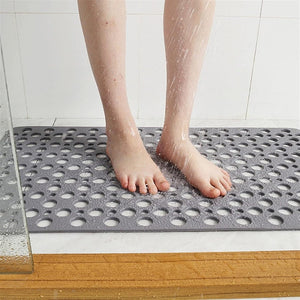
Rubber-backed bath mats can typically be machine washed on a gentle, cold-water cycle, but they need more careful drying than cotton or microfiber mats to avoid cracking. The rubber layer is the part that keeps the mat from sliding on wet tile, so protecting it is what keeps the mat both clean and safe to use.
Place the mat rubber-side down in the washer if the manufacturer recommends machine washing, or place it inside a mesh laundry bag. This reduces friction between the rubber backing and the drum, which is where cracking often starts. Wash it on its own or with a light, similarly colored load – overloading the machine puts extra strain on the seams where the fabric and rubber meet.
Skip the dryer entirely for rubber-backed mats. Lay the mat flat on a towel rack, over the edge of the tub, or on a laundry rack somewhere with good airflow. Avoid hanging it over a thin rod or line, since the weight of a wet mat can cause the rubber backing to warp or pull away from the fabric over time.
If your mat has a bonded rubber backing that the care label says to hand wash only, fill the tub with lukewarm water and a small amount of mild detergent, gently move the mat through the water, then rinse until the water runs clear. Press out excess water rather than wringing it, which can crack the backing, then lay it flat to dry
How to Remove Mold, Mildew, and Odors from a Bath Mat
Baking soda is the simplest fix for everyday odor. Sprinkle it generously over the dry mat, let it sit for 20–30 minutes, then shake it off or vacuum it up before washing as usual. For actual mold spots, a soak works better than a sprinkle: mix one part white vinegar with three parts water, submerge the affected area, and let it sit for about 30 minutes before washing. Or, if the care label allows it, use a dedicated mold remover.
If mold keeps coming back in the same spot after multiple washes, especially deep in a rubber backing or foam layer, that's usually a sign the mold has worked its way into the material rather than just sitting on the surface. At that point, replacing the mat is the safer option, since mats are stepped on with bare feet right after a shower. If you like to change your bath mats with the seasons, that's also a good opportunity to check whether the old one still provides enough grip and absorbency. A fresh look is nice, but replacing a worn mat when needed is even more important for comfort and safety.
How Often Should You Wash Bath Mats?
Bath mats need washing more often than most other mats in the house – ideally once a week. Because they're exposed to moisture daily, they can start developing odor or mildew far faster than something like a door mat or a decorative throw.
Busier households with kids, pets, or more than one person showering daily may want to wash bath mats twice a week, since more foot traffic means more moisture and body oils working into the fibers. If your bathroom is well-ventilated and only one person uses it, once a week is usually enough.
Between washes, a couple of small habits go a long way: hang the mat over the edge of the tub or a towel rack after each use instead of leaving it crumpled on the floor, and give it a shake outside every few days to release trapped moisture and dust. This alone can cut down on how often a deeper wash is actually needed.

Tapis de bain en fourrure et peluche
Enfoncez vos orteils dans un confort luxueux Marre de sortir de la douche sur un sol froid et dur ? Découvrez notre tapis de bain ultra-doux en ...

Tapis de bain magique - Super absorbant et antidérapant
TAPIS DE BAIN À SÉCHAGE ULTRA-RAPIDE Vous en avez assez de sortir de la douche sur un tapis de bain mouillé et inconfortable ? Découvrez le Magic...

Casa Mat™️ - Tapis polyvalent embossé effet pavé
Le tapis le plus confortable pour les sols froids et humides Découvrez le Casa Mat™️ – Tapis polyvalent embossé en pavés, où confort rime avec p...
Conclusion: Keep Your Bath Mats Clean and Mold-Free
Washing a bath mat properly comes down to matching the method to the material – cold water and a gentle cycle for most types, air drying instead of high heat for anything with a rubber backing, and a quick weekly wash to stay ahead of moisture before it turns into mold.
Because bath mats sit in one of the dampest spots in the house, a little consistency makes a bigger difference here than almost anywhere else. With the right care, your bath mat will stay soft, absorbent, and safe underfoot for a long time – no matter which material you've chosen.


